Project shape before polish
See sources, decisions, risks, tasks, and drafts as separate objects before they become a finished document.
BaseHalf gives each project a Map: a surface where ideas, files, decisions, and questions can be arranged as Points, opened as pages, and kept connected as the work evolves.
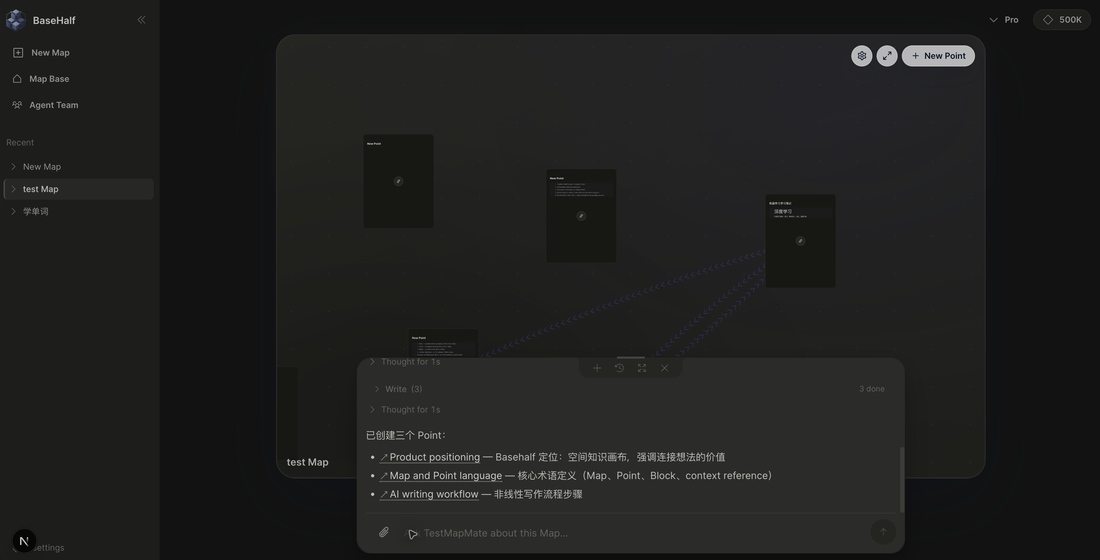
BaseHalf is not trying to make another static document. It gives AI work stable objects, visible boundaries, and enough structure to keep useful context alive.
See sources, decisions, risks, tasks, and drafts as separate objects before they become a finished document.
The Map shows which pieces exist and how they relate, so AI work is not hidden inside one transcript.
A useful Map can hold open questions, weak assumptions, and unfinished branches without pretending the work is done.
Turn the shape of one project into a pattern for the next research plan, product brief, or launch review.
A team is changing onboarding, pricing copy, analytics, support docs, and launch messaging at the same time. A Map keeps the project readable while each stream changes.
Preserve the launch goal, non-goals, owners, and deadline so every later decision has an anchor.
Create Points for product flow, engineering, data, support, docs, and go-to-market instead of one giant plan.
When the team decides where plan selection belongs, turn the choice into a Decision Point and reference it from every affected stream.
Ask what changed, which risks are still active, and which Point should become the next action.